
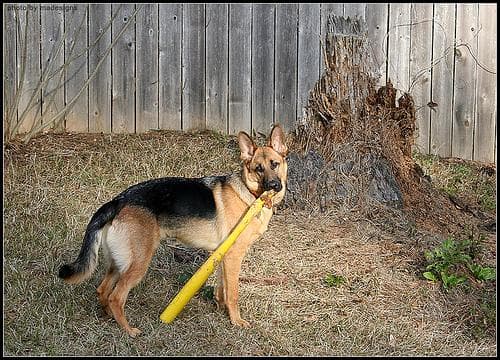
What aggression in dogs actually means
Aggression is not malice — it is communication, and usually a last resort after subtler signals have been ignored or suppressed. A dog that growls before biting is, in fact, showing good bite inhibition. The problem arises when the growl is punished (teaching the dog to skip the warning), or when the underlying cause is never addressed.
Types of dog aggression
- Fear aggression: the most common type. The dog feels cornered and attacks defensively. Preceding signs: attempts to flee, low tail, flattened ears, whale eye.
- Pain aggression: a dog in pain may bite when the affected area is touched or when moved. Always rule out a medical cause first.
- Territorial aggression: towards strangers entering the dog's perceived territory (home, car, garden).
- Resource guarding: protecting food, toys, sleeping spots or people.
- Redirected aggression: an aroused or frustrated dog snaps at whatever is closest — often the person trying to intervene in a dog fight.
- Predatory aggression: triggered by fast-moving small animals or running children. Little warning and different in nature to other types.
The aggression ladder — warning signs to recognise
Dogs warn before biting, if we know how to read them. From least to most intense:
- Hard stare (whale eye — white visible around iris).
- Body stiffens.
- Growl.
- Teeth display without contact.
- Snap without pressure (air snap — a warning).
- Bite with pressure.
Punishing growling is dangerous. The dog learns to remove the warning signals and bite directly without notice.
What to do if your dog bites or threatens
- Safety first: a well-fitted basket muzzle is not cruel — it is essential management while working on the problem. Separate the dog from vulnerable people (young children, elderly).
- Vet visit: rule out pain, neurological issues or hormonal causes before any behaviour work.
- Veterinary behaviourist: essential for genuine aggression cases. An untrained trainer can make the situation significantly worse.
- Never use physical punishment: increases fear, worsens prognosis, and dramatically raises the risk of biting without warning.
- Manage triggers during the therapy period: avoid putting the dog in situations that exceed their threshold while working on the underlying causes.
Is it treatable?
Most cases of aggression are manageable or resolvable with behaviour modification, environmental management and, where appropriate, medication. Predatory aggression has a poorer prognosis. Outcomes depend heavily on the type and severity of aggression, the dog's history, and the owner's commitment. Euthanasia is considered only when there is proven, unmanageable risk of serious harm.