
What is peritonitis in dogs?
The peritoneum is the membrane lining the abdominal cavity and the organs within it. Peritonitis is the inflammation of this membrane, most commonly caused by bacterial contamination of this normally sterile space. It is one of the most critical emergencies in veterinary medicine: without rapid, intensive treatment, it can be fatal within hours.
Main causes
Gastrointestinal perforation
The most frequent cause. A perforating gastric ulcer, a foreign body (bone, stick, toy) that punctures the intestinal wall, or a tumour causing wall necrosis and rupture allows gut bacteria to flood the peritoneal cavity.
Organ rupture
Rupture of the gallbladder (from gallstones or trauma), a prostatic or hepatic abscess, or a pyometra (infected uterus) are other common causes that release contaminated material into the peritoneum.
Post-surgical complications
Suture breakdown (dehiscence) after intestinal or gastric surgery allows digestive contents to leak into the abdomen. It typically occurs on post-operative days 3–5.
Chemical peritonitis
Bile or urine accumulating in the peritoneum after gallbladder or bladder rupture causes severe chemical inflammation that can become secondarily infected.
Warning signs
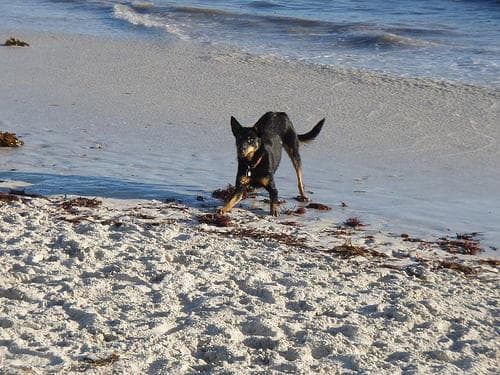
- "Praying" posture: hindquarters raised, front legs stretched on the ground — a classic sign of severe anterior abdominal pain.
- Rigid, tense, extremely painful abdomen on palpation.
- High fever (above 40 °C / 104 °F) or, in advanced stages, hypothermia (sign of shock).
- Persistent vomiting.
- Collapse and extreme weakness.
- Pale, grey, or cyanotic mucous membranes.
- Rapid, shallow breathing.
- Tachycardia.
If you observe these signs, go to an emergency vet immediately. Do not wait until the next morning.
Diagnosis
Physical examination
Abdominal palpation causes intense pain. The vet may detect rigidity and, in some cases, crepitation if free gas is present in the abdomen.
X-ray
May show free gas under the diaphragm (perforation sign), loss of abdominal detail due to fluid, or paralytic ileus.
Ultrasound and abdominocentesis
Ultrasound visualises free fluid and guides needle placement for sampling. Fluid analysis (cytology, glucose compared to blood glucose, lactate) confirms septic peritonitis.
Treatment
Initial stabilisation
Aggressive IV fluid therapy to combat shock, oxygen supplementation, pain management, and immediate broad-spectrum antibiotics (amoxicillin-clavulanate plus metronidazole, or a fluoroquinolone).
Emergency surgery
The goal is to identify and correct the contamination source (close the perforation, remove the ruptured organ, retrieve the foreign body) and perform a thorough peritoneal lavage with warm saline to reduce bacterial load. An abdominal drain may be left in place for the first 24–48 hours.
Post-operative care
Veterinary ICU for the first days: continuous monitoring, IV antibiotics, early enteral nutrition, and pain control. Recovery is long: 2–4 weeks of hospitalisation followed by careful home care.
Prognosis
Mortality from septic peritonitis in dogs is high (30–70%) even with treatment. Favourable factors include intervention within the first hours, no septic shock on admission, and a treatable cause (foreign body versus advanced tumour).
How Purzi can help
In emergency situations, having your dog's health record immediately available is crucial. With Purzi you can share previous illnesses, current medications, and past surgeries with the emergency vet in seconds — information that can make a real difference in those first critical minutes.