
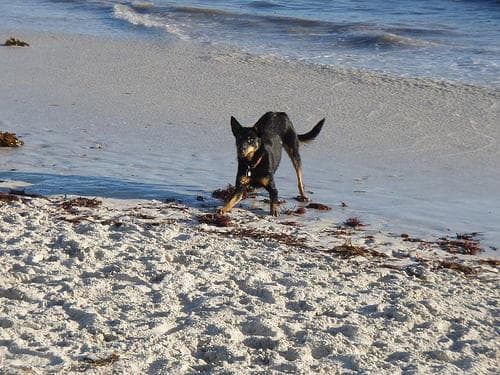
How to Prepare Your Home for a New Puppy: The Safety Checklist
The first day a puppy arrives is overwhelming — for them and for you. Preparing the house in advance means fewer emergencies, less stress for the puppy, and more time to actually enjoy the experience instead of firefighting. Here's what actually matters, in order of importance.
Safety: what to remove or secure
Toxic houseplants
Many common indoor plants are toxic to dogs: pothos, philodendron, peace lily, dracaena, aloe vera, ivy. Move them out of reach or replace with dog-safe alternatives before the puppy arrives.
Cables and power sockets
Puppies chew cables — this is a near-certainty. Cable protectors, cable tidies under rugs, or simply moving cables off the floor will prevent electrocution injuries. Socket covers are also useful.
Cleaning products and medicines
Low kitchen and bathroom cupboards are accessible to puppies who learn to nose or paw at doors quickly. Add child-safety locks to anything containing cleaning products, medicines (ibuprofen is severely toxic to dogs), or supplements.
Small objects
Anything that fits in a puppy's mouth is a choking or intestinal obstruction risk: pen lids, buttons, rubber bands, batteries, coins, hair ties. A swallowed button battery is a vet emergency.
Bins
Use a bin with a secure lid or keep it in a cupboard. Bin diving is one of the main causes of food poisoning in dogs — cooked bones, grapes/raisins, chocolate, xylitol (in sugar-free products), avocado and macadamia nuts are all dangerous.
Stairs and balconies
Small puppies can fall down stairs or squeeze through balcony railings. A stair gate or balcony net is a short-term solution while the puppy learns the limits of the space.
What to buy before the puppy arrives
The essentials
- Bed or crate: slightly larger than needed (they grow), machine-washable, in a quiet spot away from the front door
- Food and water bowls: stainless steel or ceramic — easier to clean hygienically than plastic
- Collar and lead: collar with an ID tag (name + phone) from day one. A lightweight 1.5-2m lead for first walks.
- Carrier or crate: for the journey home and vet visits. Introduce it positively from the start — it should feel like a safe den, not a punishment.
- Puppy food for their breed size: if switching food, do it gradually over 7-10 days to prevent digestive upset
- Toys: at least 3-4 varied options (rubber chew, rope toy, ball, food puzzle) — puppies need to chew, better on their toys than your furniture
Useful but not urgent
- A playpen for unsupervised periods
- Puppy training pads for the first few weeks
- Bitter spray to deter chewing on cables/furniture
- Puppy shampoo
Setting up the sleeping area
Your puppy needs their own space that feels safe and consistent. Keep it:
- Away from draughts
- In a quiet corner (not in the middle of a corridor)
- Not in sight of the front door — you don't want a guard-dog mentality from week one
Many vets recommend letting the puppy sleep in your bedroom for the first few nights — the human smell reduces anxiety. You can gradually move them to their permanent spot once they're settled.
The first night
Most puppies cry on the first night. This is normal — they've lost their mother, siblings and familiar smells all at once. What helps:
- Sleep in the same room (not necessarily the same bed, but nearby)
- A warm-water bottle (wrapped in a towel) and a ticking clock near the bed — mimics the heartbeat and warmth of the litter
- A piece of cloth from the breeder with the mother's scent — ask for one
- Don't rush in every time they whimper if you know they're safe — responding every time teaches them that crying equals company
Set up Purzi on day one
Before the chaos of the first day takes over, set up your puppy's profile in Purzi: breed, date of birth, weight, microchip number, photos. When the first vet appointment comes, you'll have everything to hand. The health tracker keeps your vaccination and worming schedule so nothing falls through the cracks. Create your puppy's Purzi profile.
FAQs
- Can I let my puppy meet the cat straight away?
- No. Introduce them gradually: scent exchange first (swap bedding), then visual contact through a door, then short supervised meetings. The cat needs high escape routes the puppy can't reach.
- When can I leave my puppy alone for the first time?
- Not at all in the first week. Then build up gradually: 5 minutes, then 15, then 30. Never jump straight to several hours.
- Do I need to puppy-proof the garden too?
- Yes. Check for toxic plants (foxglove, yew, rhododendron are all common in UK gardens), gaps in fencing, garden chemicals and compost bins (compost can contain dangerous moulds).