Why body language is their main language
Although dogs do vocalise (barking, growling, whining), most of their communication is postural and gestural. Learning to read it not only strengthens your bond — it prevents accidents. Many bites happen because people missed clear signals of discomfort.
Signs of calm and wellbeing
- Tail at mid-height, soft rhythmic wag: relaxed and happy.
- Loose body, relaxed muscles: natural posture without visible tension.
- Ears in neutral position: neither flattened back nor pushed far forward.
- Open, relaxed mouth, tongue hanging loosely.
Stress and fear signals (calming signals)
Turid Rugaas described these as "calming signals" — the dog uses them to de-escalate a situation or communicate discomfort:
- Yawning out of context (not tired).
- Licking the nose or lips without having eaten.
- Looking away or turning the head.
- Sniffing the ground during a socially tense moment.
- Scratching without a real itch.
- Shake-off, as if wet, immediately after a tense interaction.
Signs of intense distress
- Tail tucked between the legs.
- Ears flattened completely against the skull.
- Crouched, shrunken posture.
- Excessive panting without heat or physical effort.
- Visible trembling.
- Escape attempts or hiding.
Alert and high-arousal signals
- Rigid body, weight forward on front paws: highly alert, assessing the situation.
- Ears erect and angled forward: focused attention.
- High, tense tail: not happiness — high arousal or a threat signal.
- Hard, unblinking stare: serious signal — don't hold direct eye contact.
Read the whole body
A single signal in isolation can be ambiguous — always look at the whole picture: body posture + tail + ears + facial expression + context. A dog with a high tail but a loose body is aroused but not threatening; the same dog with a stiff body needs distance.
Play signals
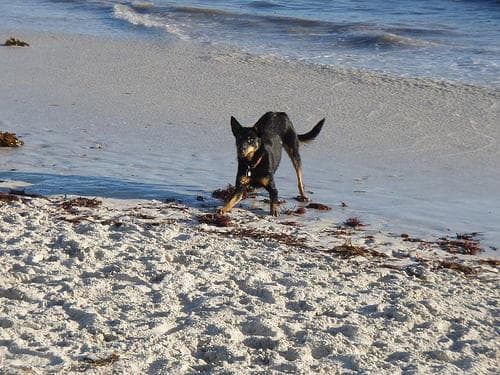
- Play bow (front end down, hindquarters up): unambiguous invitation to play.
- Exaggerated, "clumsy" movements: broadcasting that it's play, not a threat.
- Turn-taking: in healthy play, roles swap — it's not always the same dog chasing.