
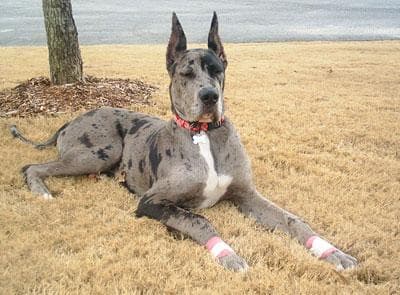
The "Apollo of dogs"
The Great Dane is one of the oldest and most majestic breeds — originally a German hunting dog for wild boar, now a family companion. Behind the elegance and size lies a hard truth: lifespan averages 7-10 years, one of the shortest among all dogs.
Size and appearance
- Height: males 80-90 cm, females 72-84 cm.
- Weight: males 54-90 kg, females 45-70 kg.
- Coat: short. Colours include harlequin, black, brindle, fawn, blue.
- Lifespan: 7-10 years (rarely longer).
Temperament
- Gentle and affectionate: the "lap dog in a giant body".
- Calm indoors: sleeps most of the day.
- Sensitive: hates harsh handling.
- Good with children — but the size makes supervision essential.
- Needs company: suffers alone for long hours.
Why they live so short
1. Size itself
Giant breeds age faster. Rapid puppy growth stresses bones, joints, heart.
2. Dilated Cardiomyopathy (DCM)
Leading cause of death. Around 30-40% of Great Danes develop DCM. Annual echocardiogram from age 3-4 is essential.
3. Bloat (GDV)
The breed with the highest bloat risk globally — up to 5x more likely than other breeds. Preventive gastropexy during neutering is strongly recommended in the UK.
4. Osteosarcoma
Bone cancer particularly common — affects long bones in young adults (4-7 years).
Puppyhood: the critical phase
- Giant breed puppy food — specific, not generic "large breed".
- Balanced calcium/phosphorus — excess causes bone deformities.
- Never supplement calcium.
- Slow growth is good.
- Controlled exercise for first 18 months — no jumping, no long runs as a puppy.
Adult: bloat prevention
- 2-3 meals daily, never one large.
- No exercise 1h before and 1h after feeding.
- Raised bowls not recommended — paradoxically may increase risk.
- Preventive gastropexy via laparoscopic or open surgery.
Senior care (5+ years)
- Annual cardiology echo from age 3-4.
- Omega-3 at full joint dose.
- Sudden lameness — investigate urgently for osteosarcoma.
- Orthopaedic beds essential.
UK realistic costs
- KC puppy from reputable breeder: £1,500-2,500.
- Monthly food: £100-180 (5-8 kg kibble/month).
- Annual echo: £150-300.
- Preventive gastropexy: £600-1,200.
- DCM treatment: £50-130/month once diagnosed.
How Purzi helps
Set up your Great Dane with breed in Purzi — the AI factors in giant-breed status (portions, bloat risk, cardiology reminders). Ask the AI chat about specific symptoms. UK insurance with cardiac and chronic disease cover is essentially mandatory for this breed — without it, cardiology + possible surgery + chronic medication easily exceed £3,500/year.